Franklin Township’s AFFF Is Gone. Here’s What It Took
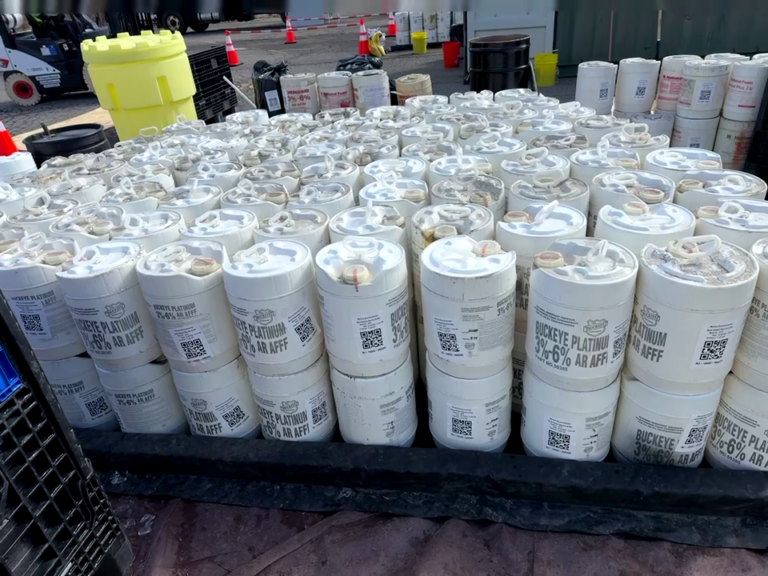
For over two decades, a small Ohio fire department carried over 1,300 gallons of hazardous firefighting foam, accumulated from different manufacturers over years of service.
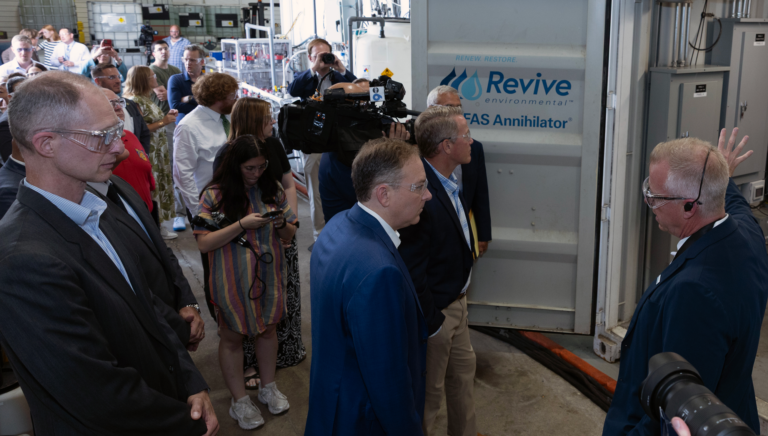
Local CBS 10TV covered Franklin Township’s story last night. Watch the segment below, then read on for the full story.
For 20 years, Chief Robert Arnold, Lieutenant Jason Brockmeyer, and their crew at Franklin Township Fire Department were responsible for responding to hydrocarbon fuel fires — a particularly dangerous class of fire that includes crude oil, gasoline, and natural gas. That meant always having Aqueous Film-Forming Foam (AFFF) on hand, a specialty fire-extinguishing product that blankets fires with a thick foam that seals the fuel surface and deprives it of oxygen. Over the years, different products arrived from different manufacturers in containers of every size. All of it added up. Then the science caught up, and they learned about the dangers of AFFF.
AFFF contains per- and polyfluoroalkyl substances (PFAS), a class of synthetic chemicals linked to cancer, immune system dysfunction, and long-term environmental contamination. PFAS do not break down. They accumulate in water, soil, and the human body. AFFF is extraordinarily effective at suppressing fuel fires, but it is hazardous to communities and the environment.
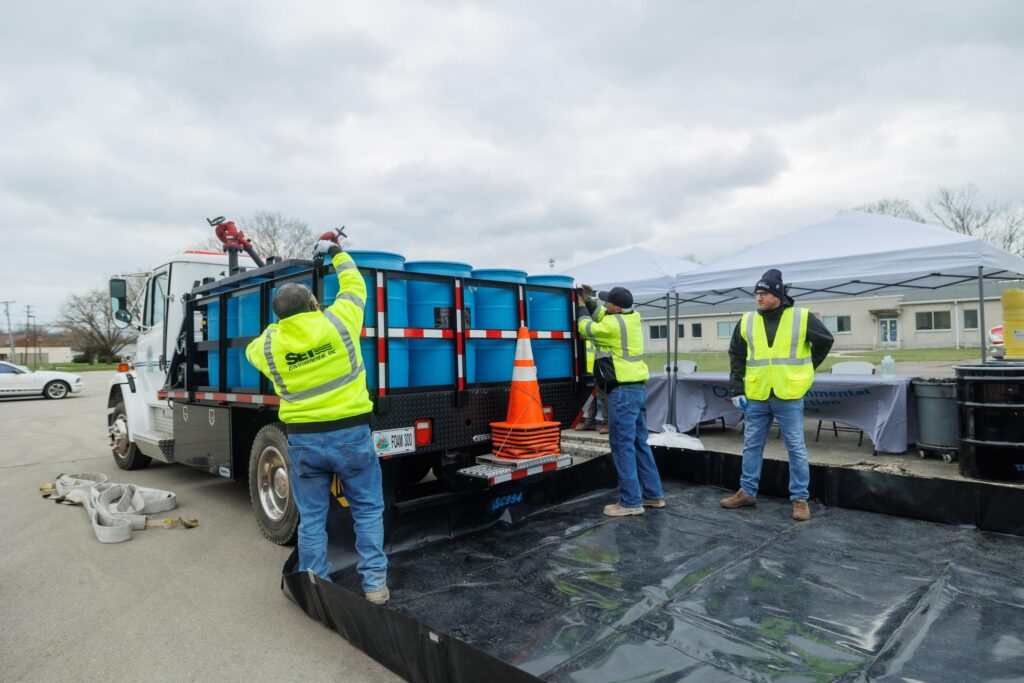
In 2024, Governor Mike DeWine and the Ohio EPA launched the state’s AFFF Takeback Program, the first of its kind in the nation. The program gave fire departments across Ohio a no-cost pathway to surrender their stockpiles for permanent destruction. Departments did not hesitate. Franklin Township registered, inventoried over 1,300 gallons of material, and handed it over.
Today, Franklin Township’s trucks carry fluorine-free foam. The old foam is gone for good.
Seeing What Happens Next
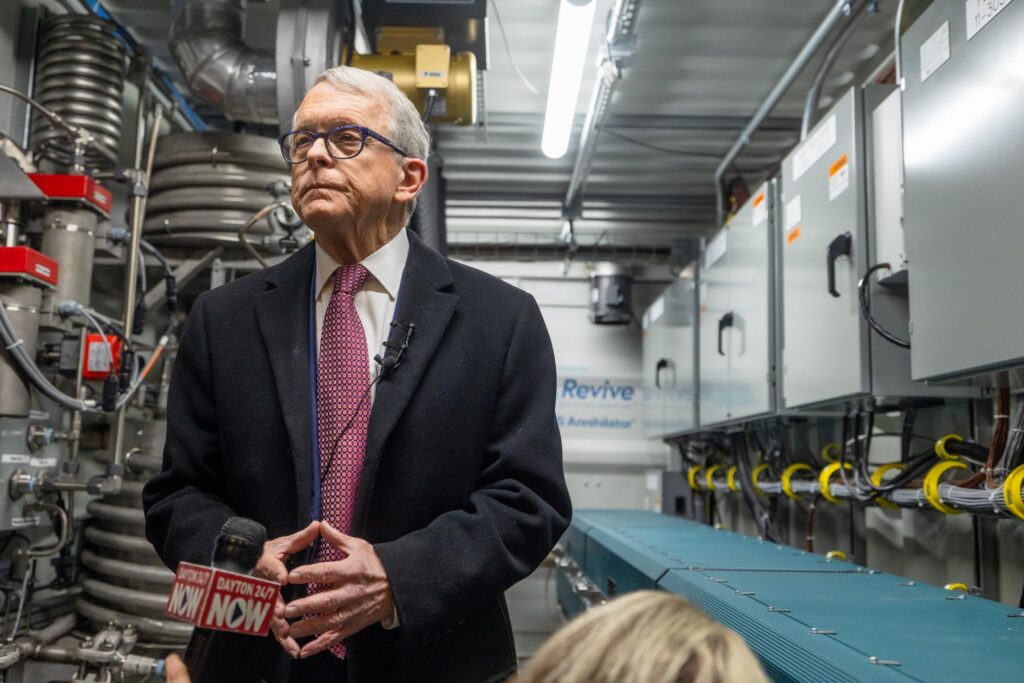
After handing over their foam, Franklin Township wanted to learn more about how it was being destroyed. They wanted to understand how PFAS, known as forever chemicals, could truly be eliminated. Revive invited Chief Robert Arnold and Lieutenant Brockmeyer to tour the Columbus facility and see the PFAS Annihilator® in action. It was a short drive, and they were happy to make it.
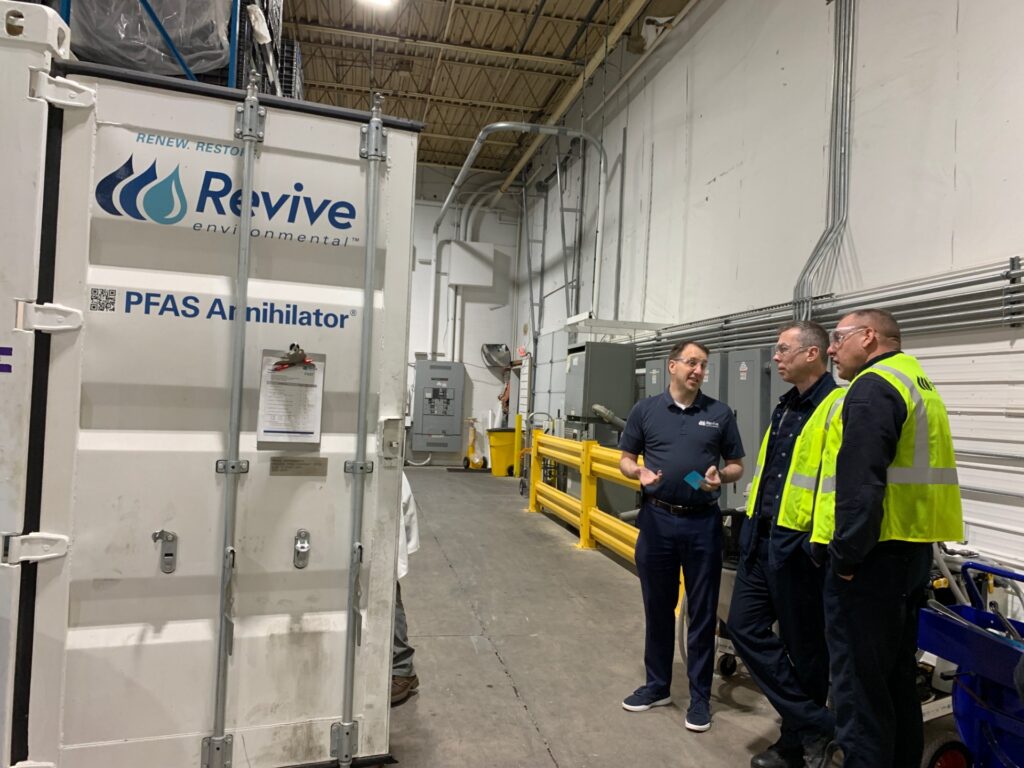
At Revive’s Columbus facility, Chief Arnold and Lieutenant Brockmeyer walked the operations floor and watched the system running in real time. The technology, which uses Supercritical Water Oxidation (SCWO), is the only verified destruction method operating at commercial scale that can meet Ohio’s program goals.
Every batch of PFAS-impacted material processed through the PFAS Annihilator is tested by an independent, third-party laboratory against U.S. EPA Safe Drinking Water Act standards before anything leaves the facility. Revive’s Columbus facility operates under the strictest industrial discharge permit in Ohio for PFAS in water. What Franklin Township handed over would not be relocated or stored elsewhere. It would be destroyed, verified, and discharged.
What It Means to Finally Have This Done
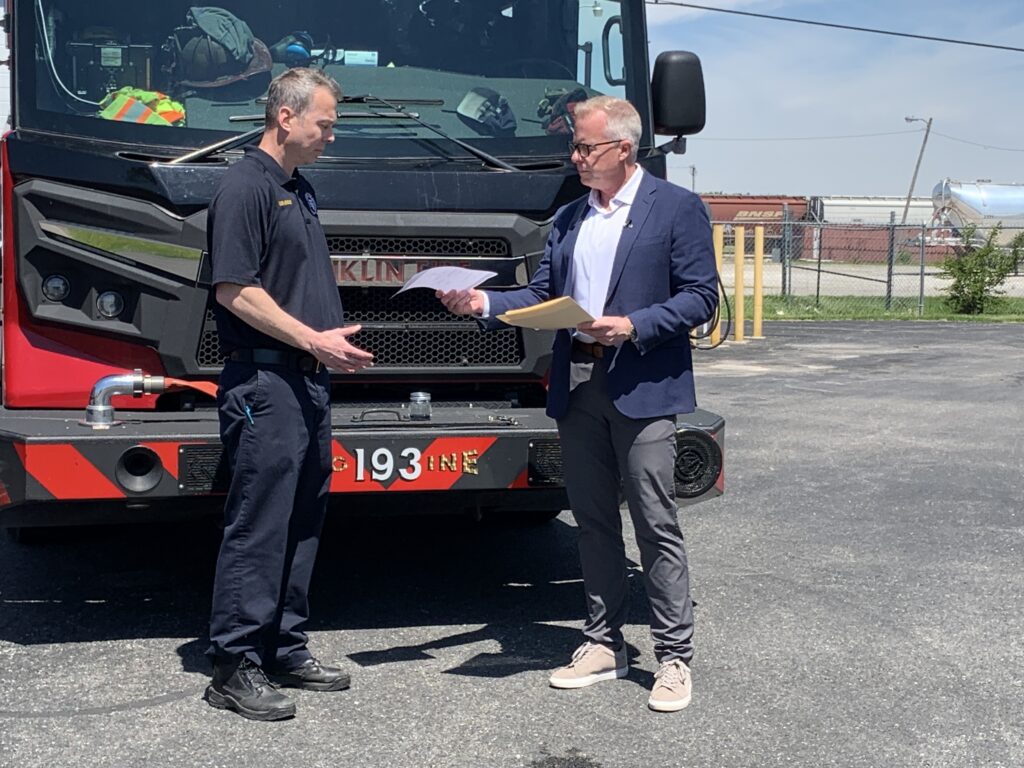
It is amazing that there is a technology that can completely destroy the PFAS and we now have the verification to prove it — and a sample of the clean effluent now stands in our trophy case. We are really excited to finally have this behind us. This material is not going to harm our crew, our neighbors, or the environment. We have safe alternatives in our trucks now, and knowing the old foam is gone for good, that means the world to us.
– Chief Robert Arnold, Franklin Township Fire Department
Ohio Led the Way
Franklin Township is one of 120 fire departments that participated in Ohio’s program — and their contribution was significant. The 1,300 gallons they surrendered represented more than 10 percent of all the AFFF collected through the entire statewide program. The nation’s first statewide AFFF takeback program, launched in 2024, created a model that other states, including New Hampshire, North Carolina, and New Jersey, are now following. Revive is on track to complete destruction of all material collected through the program by the end of June 2026 — over 13,000 gallons, every batch independently tested.
Fire departments across the country were stuck with the same problem. They had stockpiles of PFAS-containing foam with no safe, permanent way to get rid of it. Landfills would not destroy it. Incineration could not guarantee what came out the other end. And every year that passed, the liability and the risk to their communities grew.
Ohio chose to act. There was no federal framework, no statewide model to follow, and no established pathway for permanent AFFF destruction at this scale. Governor DeWine and the Ohio EPA built one. They identified the problem, stood up the program, vetted the destruction method, and saw it through to completion. The credit belongs to Ohio and to every fire department that showed up.
Revive is proud to be part of this. We are an Ohio company, and it is great that we have the opportunity to protect the communities we live and work in. Watching fire departments like Franklin Township finally close this chapter is exactly why this work matters.