New Jersey’s AFFF Collection Program Is One of the Largest in U.S. History. Here’s What It Looked Like on the Ground.
Over 150,000 gallons of PFAS-containing firefighting foam. More than 300 fire departments. Two collection sites running simultaneously across the state. On March 20, 2026, New Jersey marked a milestone in one of the largest coordinated aqueous film-forming foam (AFFF) collection and destruction programs ever undertaken in the United States.
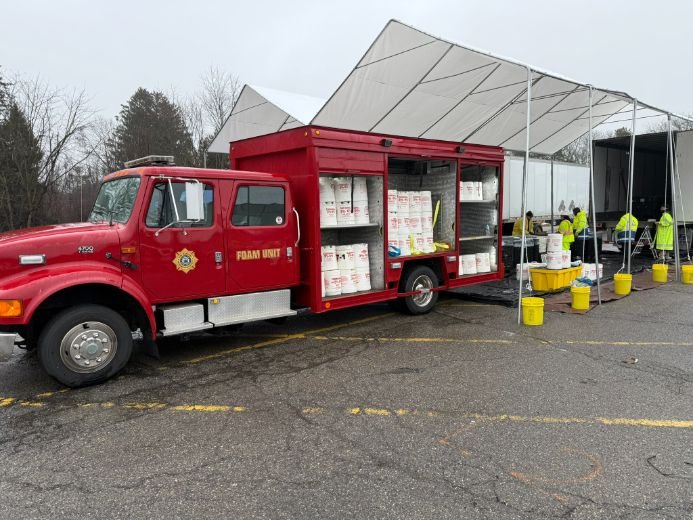
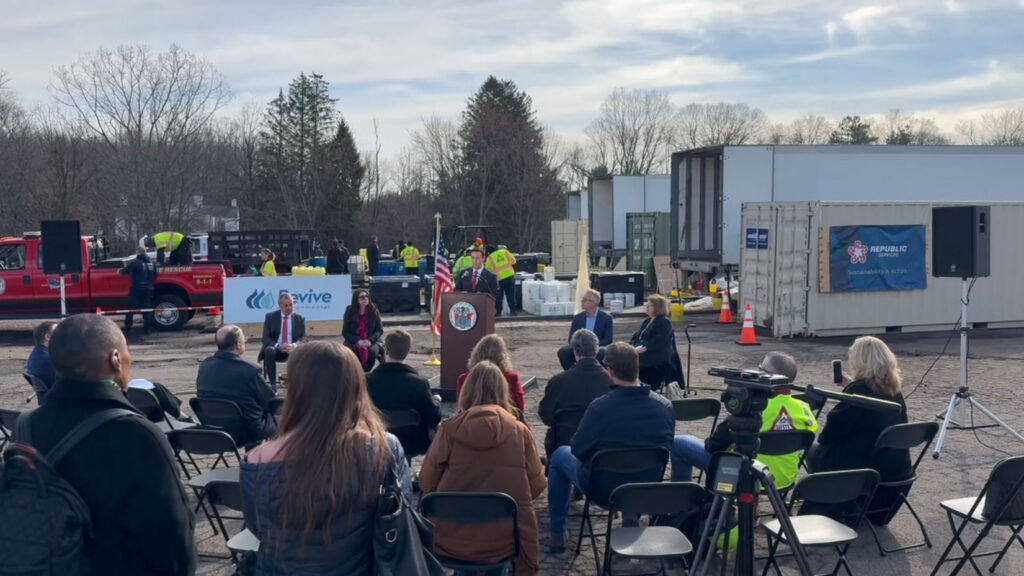
At the northern collection site in Hunterdon County, trucks arrived on schedule as fire departments unloaded materials they had stored for decades. Standing before rows of containers, New Jersey DEP Acting Commissioner Ed Potosnak put it plainly: “This is a very big day for us. It’s a giant leap forward towards a cleaner environment.”
What New Jersey is executing is not just a cleanup. It is a model others need to follow.
A Man-Made Problem, Decades in the Making
New Jersey’s dense industrial and transportation infrastructure meant fire departments across the state had accumulated significant legacy AFFF stockpiles over decades. Over time, we’ve come to understand that exposure to AFFF pose serious environmental and health risks.
PFAS, or per- and polyfluoroalkyl substances, are synthetic chemicals used in firefighting foams, industrial processes, and consumer products. They don’t break down in nature; instead, they accumulate in soil, water, and the human body. They are linked to cancer, immune dysfunction, and long-term environmental harm. For fire departments, the AFFF stockpiles sitting in their stations represented a growing liability: concentrated stores of PFAS that, if they were to enter the environment, can contaminate groundwater for decades and cost communities tens of millions of dollars to remediate.
New Jersey State Fire Marshal Wayne Wolk has been working toward this moment for seven years. He was direct about what’s at stake.
“Cancer is the leading cause of line-of-duty deaths in the fire service. Approximately 70% of all active-duty deaths are related to cancer.”
– Wayne Wolk, New Jersey State Fire Marshal
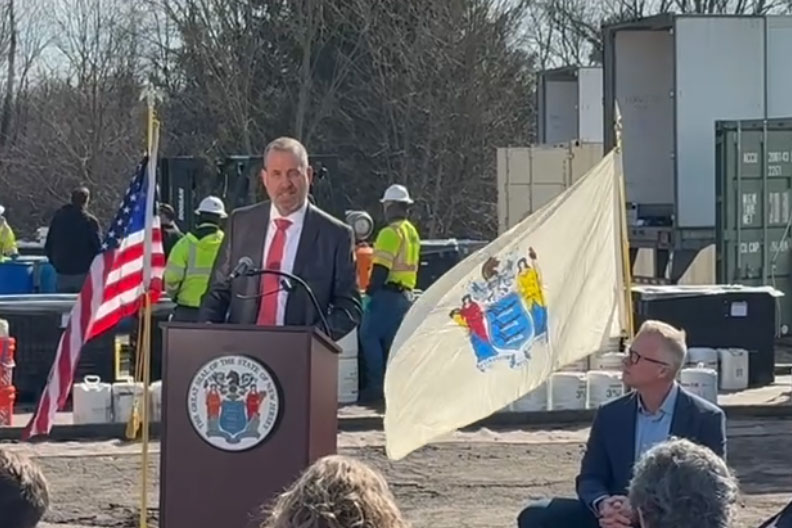
Wolk didn’t frame this as a compliance issue. He framed it as a moral one. “Firefighters willingly put themselves in dangerous situations to protect the residents of our state,” he said. “As leaders in New Jersey, we have an obligation to lessen those risks — including those that are unseen.”
The state decided to act before the problem deepened, and before the January 1, 2027 deadline when AFFF will be banned from use and storage in New Jersey.
Not Storage. Not Transfer. Destruction.
Before contracting Revive Environmental as the prime contractor, NJDEP conducted a detailed analysis of every available disposal option. The conclusion was clear: verified, permanent destruction. Not landfill disposal. Not incineration with uncertain residuals. Not shipping the material to become another state’s problem. The goal, as Revive CEO Rick Gillespie put it, was ensuring that AFFF would “never become a problem for another community or another generation.”
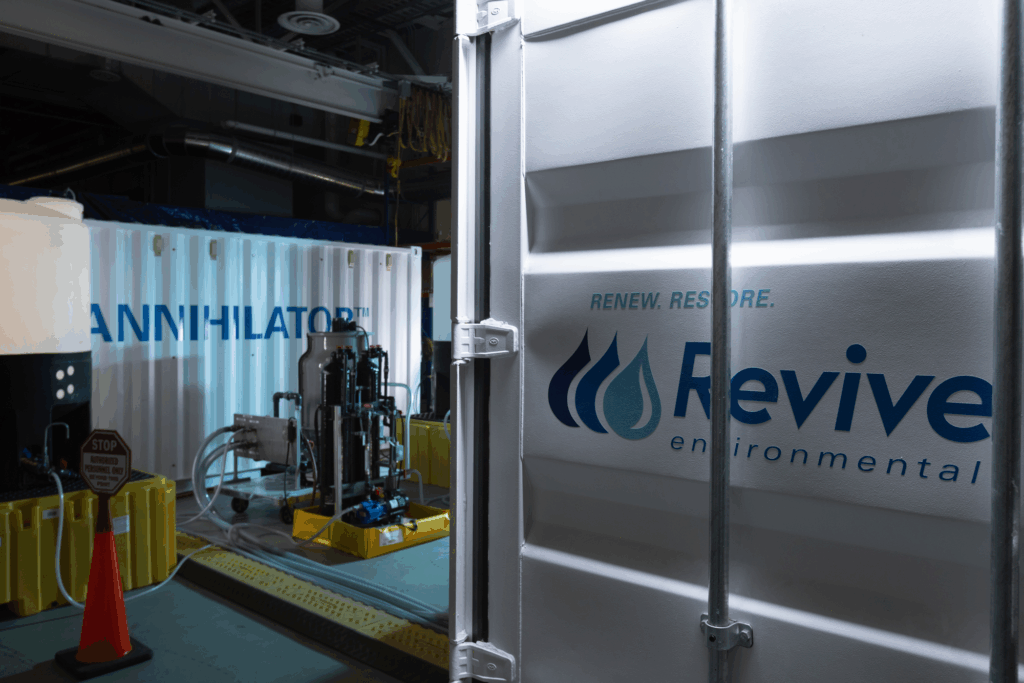
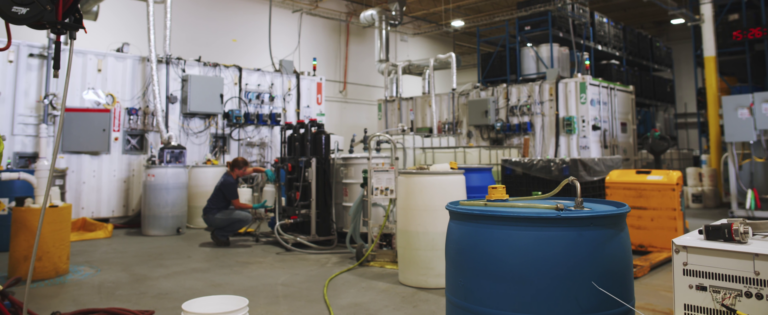
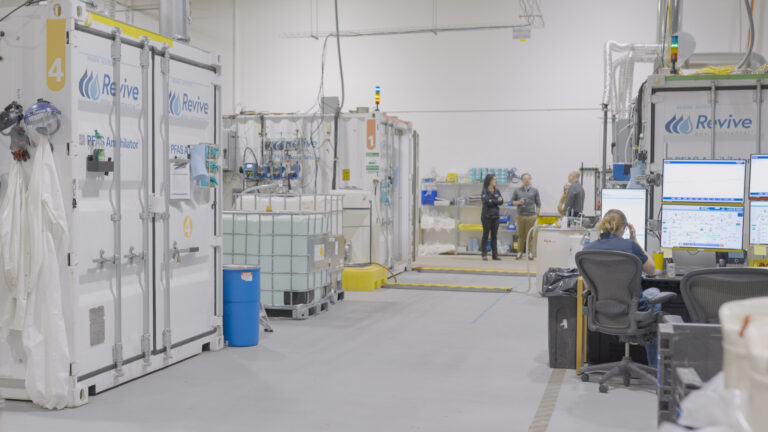
Using Revive’s PFAS Annihilator® technology, PFAS compounds are broken down at the molecular level through supercritical water oxidation (SCWO). The process converts them into benign mineralized byproducts, with every batch independently tested to confirm that treated water meets or exceeds EPA drinking water standards before discharge.
NJ DCA Commissioner Jacquelyn Suarez framed the economics plainly:
“It is going to be much more costly if we do not do these things at the outset — whether that is through healthcare costs, whether that is through remediation costs in the environment later on.”
– Jacquelyn Suarez, Commissioner, NJ Department of Community Affairs
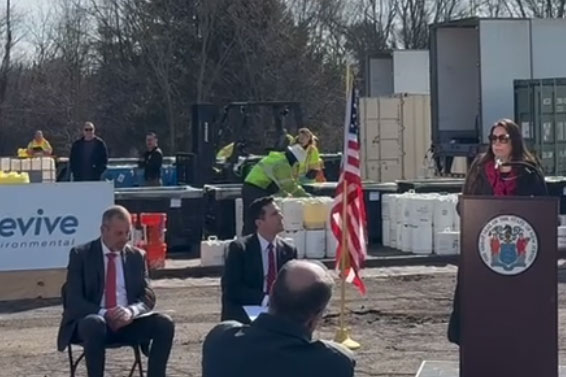
Republic Services supports collection logistics and transportation to Revive’s permitted Ohio facility, ensuring the materials are handled safely from pickup to final destruction.
What the Program Looks Like in Practice
Two collection sites operated simultaneously, one in Hunterdon County and one in Delmont, to give fire departments across the state accessible drop-off options at scheduled times. More than 350 fire departments and fire academies are participating statewide, with sixteen alone dropping off on media day.
The process is precise: departments register their stockpiles in advance, arrive at their assigned time, complete manifests on-site, and leave with documentation. Republic Services loads and transports the material to Revive’s permitted facilities in Columbus, Ohio, where seven PFAS Annihilator® units run around the clock. Departments receive a Certificate of Processing confirming permanent elimination and liability release.
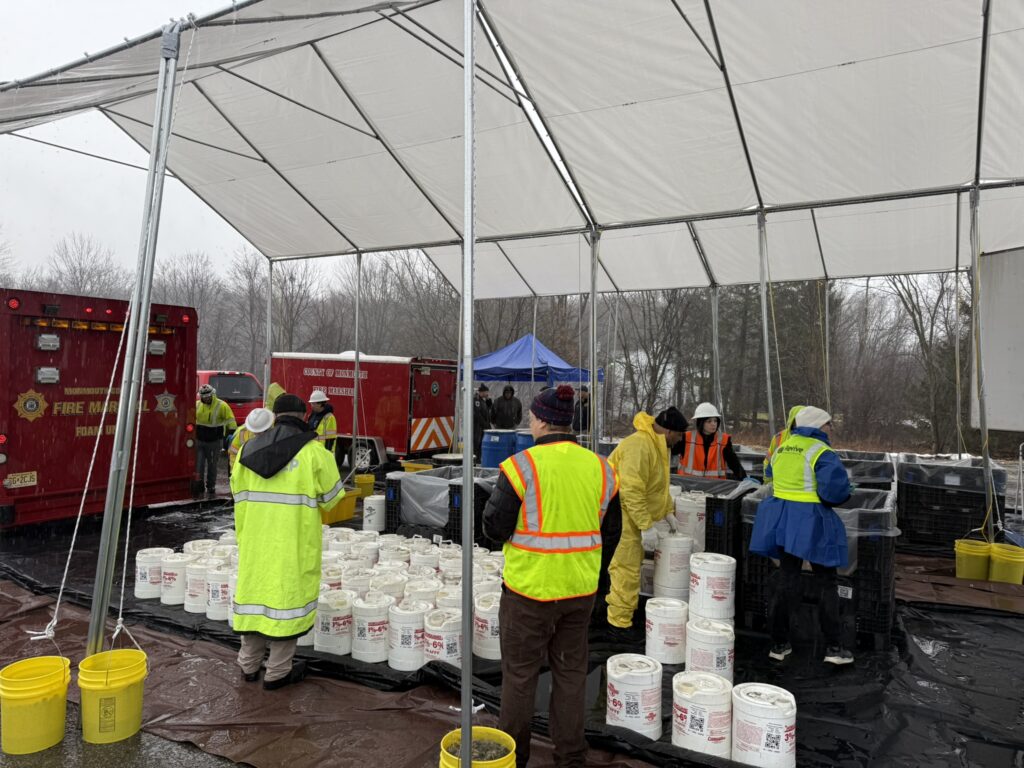
Beyond the collection events, Revive is also supporting the decontamination of 19 AFFF tenders statewide. Each vehicle is drained, rinsed, and returned to service, allowing departments to fully transition away from AFFF without handling the residuals themselves.
Protecting Those Who Protect Us
Across Revive’s collection events in New Jersey, New Hampshire, Ohio, and beyond, the reaction from fire departments has been consistent. Gillespie described what those moments look like on the ground.
“At every one of those events, firefighters and their families have shown enthusiasm and relief for the state’s initiatives to collect and destroy these AFFF firefighting foams. They know that they’ve been personally impacted. They have friends and loved ones who have been impacted. And they are looking for solutions.”
– Rick Gillespie, CEO, Revive Environmental
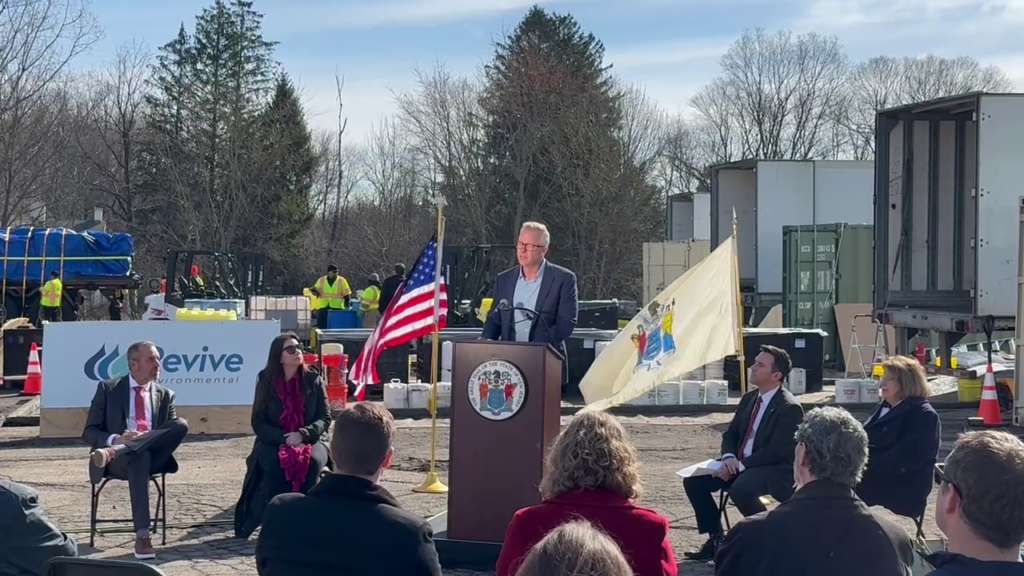
That relief is the point. As Commissioner Potosnak put it, what New Jersey has built goes beyond collection:
“We’re not only removing the dangerous PFAS from New Jersey. We’re also ensuring that these forever chemicals are permanently destroyed and truly measurably benefiting the environment and the people of New Jersey.”
– Ed Potosnak, Acting Commissioner, NJ Department of Environmental Protection
With 150,000 gallons targeted and more AFFF in the state still to be addressed, this program is built for the long haul.
For states still working through their AFFF programs, New Jersey has set the gold standard: end-to-end program management, verified destruction, and a partnership model that takes the burden entirely off fire departments. The technology is proven. The logistics are operational. The blueprint exists.
Gillespie closed by zooming out:
“What is happening here today and across the state is a model for the rest of the nation. This is how you protect the people who protect us.”
– Rick Gillespie
The question for other states is no longer whether this can be done. It’s whether they’re ready to do it.