Meet Alex Easley: Revive’s Mechanical Engineer Building the Next PFAS Annihilator
This is the first in a new series introducing the people behind Revive Environmental.
When Alex Easley explains his job to his three kids, he keeps it simple. “There are these forever chemicals that are present throughout the environment. They call them forever because until now, there has been no good way to eliminate them,” he says. “Dad’s company found a way to break that down and actually destroy the chemical. This can leave our lakes and rivers and other water sources in better condition.” He has found that kids are an easier audience than most adults. “Kids don’t enter that conversation with a preconceived notion of what the process might look like, but they latch on to the larger picture of getting rid of pollution, helping the environment, and making the world a little bit better, and they think that’s pretty cool.”
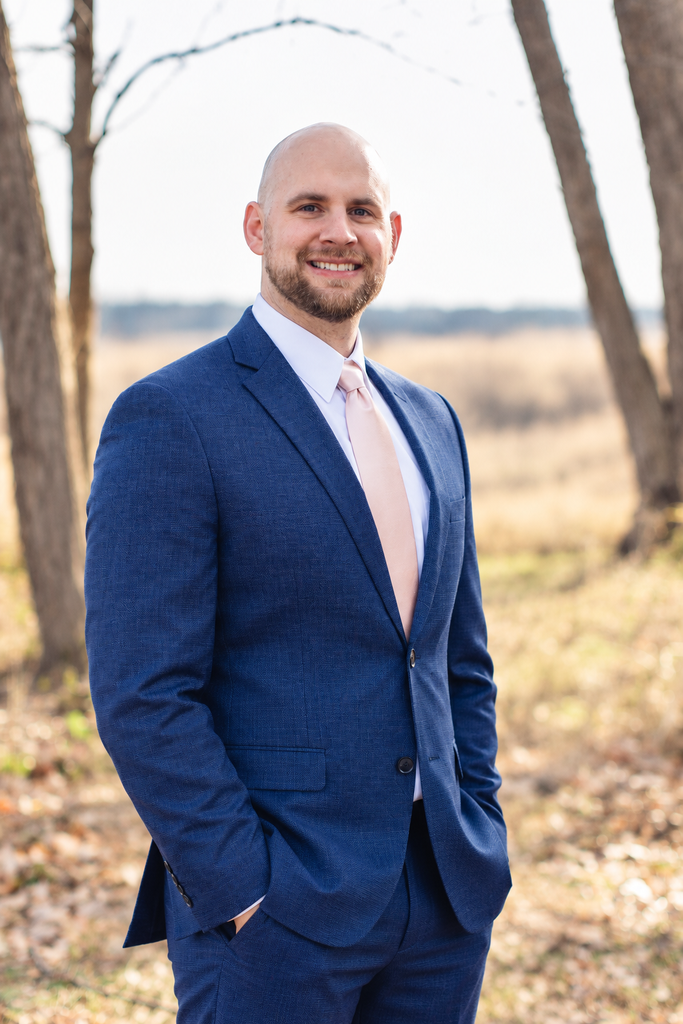
Recently, Alex’s wife came across an Instagram post about a Columbus company that had made forever chemicals no longer forever and sent it to him. “That popped up organically on her own feed,” he says. “It’s neat to have kind of that focus and spotlight on what we’re doing here.” Alex is Revive’s Mechanical R&D Engineer and the Fabrication Integrator on the newest PFAS Annihilator, the largest supercritical water oxidation (SCWO) system Revive has built to date. He joined in August 2025 and was nominated for this feature by his manager, Doug Hendry.
“In his time at Revive, Alex has consistently demonstrated Revive’s core values. He understands and fully embraces that we are doing something difficult and never done before.” – Doug Hendry, Chief Technology Officer
Ten years in the lab
Alex grew up in Rochester, Minnesota, one of five children of a nurse and a civil engineer. He moved to Columbus for his first degree, in education, from Ohio State University, where he met his wife. After a year in Florida and a move to Cleveland, he earned a second degree in mechanical engineering from Cleveland State University. He returned to Columbus in 2015 to be near friends and family.
From 2015 to 2025, he did preclinical inhalation research, first at Battelle and then at AmplifyBio after it spun out from Battelle. While in this role, he designed exposure systems to test the toxicological effects of various airborne pollutants and pharmaceuticals. “My team was involved in the early stages of a study, but our phase ended weeks or months before the conclusion of the project, so it was easy to be disconnected from the critical findings.” When that chapter closed in 2025, he landed at Revive, another Battelle spinout. Three former teammates from AmplifyBio had already made the move and had been encouraging him to join the team. He also knew the PFAS problem well, since it has been a company-wide focus during his time at Battelle. “It’s a big relief to find a company with a strong mission you support, and you can be confident that you are making a positive impact.”
Meetings, wrenches, and a small team
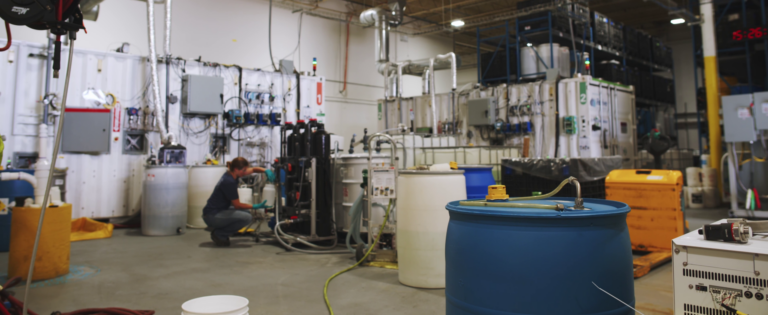
Alex finds his day-to-day role a refreshing way to use his mechanical engineering degree and his R&D experience in tandem. As Fabrication Integrator, he works the build and procurement phase of the new system, keeping schedule and budget on track and making sure the build team and engineers have what they need from each other. Next up is planning how the system starts up for the first time. “My role is a good mix of planning meetings, engineering design, collecting analytical samples, and turning wrenches on the shop floor.”
Although he’s leading the build of Revive’s largest PFAS Annihilator to date, he is quick to give kudos to his team. “We are a small engineering and technical team, and everyone at Revive is contributing to the future. We all work closely together, so it’s been a fun, collaborative process.”
A lot of what goes into the system has to be designed in house, because few off-the-shelf parts are built for the conditions inside a supercritical water oxidation (SCWO) unit. “Nothing is made to withstand what we’re doing… to be able to design that and make custom parts and custom solutions is very cool.”
Alex has also found that his education degree is being put to use in his new role. “It’s helped with communicating new processes, training, and SOPs. I try and convey new information based on the audience’s current understanding and meet them where they are.”
Of his time at Revive so far, Alex says, “I joined Revive at a very exciting time. There has been so much change in the short time I’ve been here and helping drive the progress has been very rewarding.”
Coach, volunteer, dad of three
Outside of work, Alex and his wife stay busy raising three kids, ages 9, 7, and 2. He coaches youth soccer, and the family volunteers often at the kids’ school. When the family finds free time from sports, they enjoy escape rooms, eating at new restaurants, and cheering on the Buckeyes and Columbus Crew.
Quick hits
- Scuba certified for 22 years.
- Played trumpet from fourth grade through high school.
- Played tennis and did musical theater in high school and is still a fan of both.